De Josefine Kammerer / kultur 24 / 19 agosto 2019
ABAJO LA TRADUCCIÓN AL ESPAÑOL
%203.36.55%E2%80%AFp.m..png)
.jpeg)
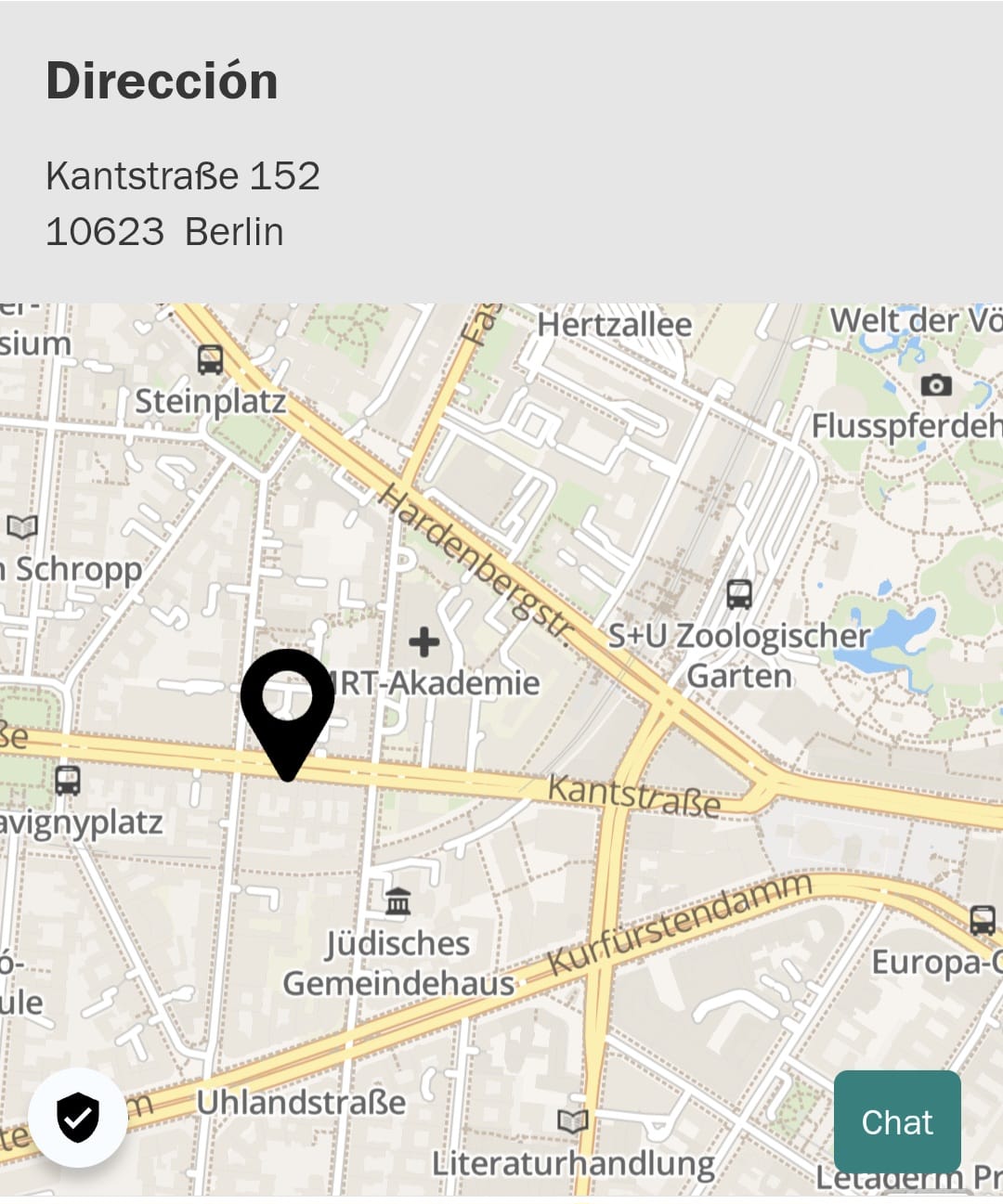
Already walking on the sidewalk along the typical small, round and golden-edged bistro tables arranged under the dark green and white marquee and the bright red illuminated letters reading the restaurant name, smelling the exquisite aromas that emanate out of the restaurant, mixed with a light note of cigarette smoke, as well as listening to the clinking sound of glasses, plates and cutlery, at Paris Bar on Kanstraße in Berlin-Charlottenburg one feels like walking along Rue Vernier in Paris.
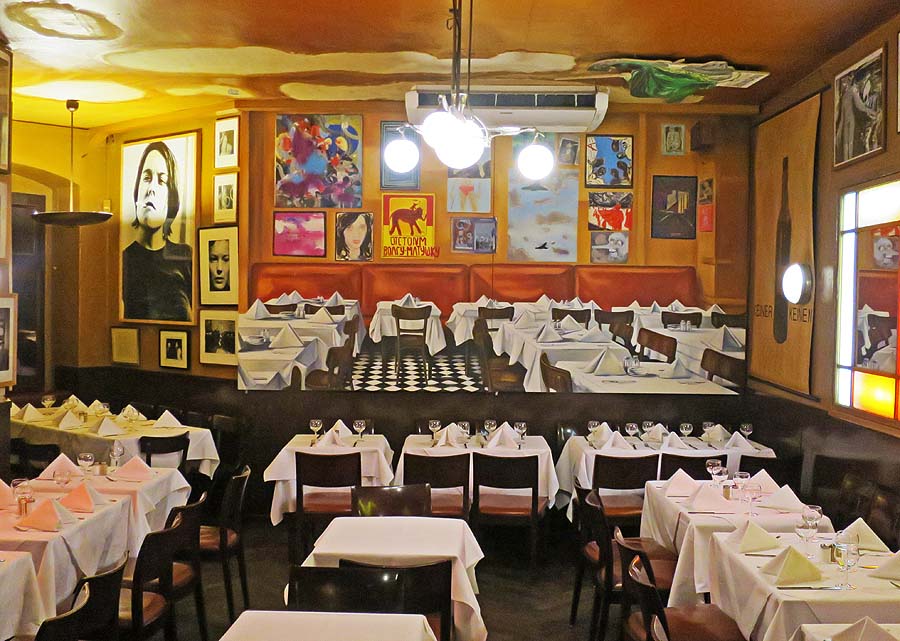
At the entrance into the restaurant, you are welcomed with the French inscription on a doormat reading „Passant Sois Moderne“ (“Passerby, be modern”), which was once upon a time found above the entrance to the artistic headquarters of Paris, the cabaret “Le Chat Noir”. And truly, once inside you are transported through time, at least a bit closer to the “Belle Epoque”, with masterpieces of art and fine prints of well-known contemporary German artists and and also regular guests of the restaurant, such as Daniel Richter, Jürgen Teller, Cosima von Bonin, etc., adorning the walls, pathways, corners and even the ceilings of the two main dining areas. Once there was also a work of the same name by Martin Kippenberger, with a scene from the restaurant. For lending this picture the artist had agreed with the owners on a right to a life-long free hospitality. The painting, however, was sold in an auction in London in 2009 for almost 2. 5 million pounds.
We were immediately escorted to our seats while passing in-between tables were artists, eccentrics and hipsters from Berlin were clearly enjoying of the atmosphere around them. It is unmistakable that the Paris Bar has been an institution for the Berlin art scene for decades. In one of the dining areas, a wall is dedicated solely to memories by way of a collage of hundreds of Polaroid images that record the first decades and golden ages of Paris Bar.
Michel Würthle © Holger Jacobs
Michel Würthle, himself a draughtsman, has been managing the restaurant since 1979. Hardly any restaurant in Berlin has made as many headlines. From tax fraud and scandalous parties, to spotting international stars, and even on impending insolvency. Also the Plexi glasses, used to serve the drinks in and are surprising at first, reveal that here the one or other evening may not be over with the official opening hours, but rather ends in unrestrained parties with dancing on the tables.
Fehmi, our congenial host on this evening, has been working at Paris Bar since Würthle’s takeover and in these 40 years not only has the Paris Bar left its mark on him, but also the other way around – his passion and generosity, subtle (and French resembling) lovable arrogance, relaxed attitude and his cheeky grin have contributed the Paris Bar a flair that makes the guests feel at ease here and indulge in the evening without restraint.
He knows everything, and everything better – at least like hardly anyone else in the restaurant, when it comes to the food and drinks on offer. So of course, he was our ideal accomplice for that evening. To activate the taste buds, he first served us a wonderfully sparkling welcome champagne with a dozen of Fines de Claire N°2, in addition, classically, grain bread and butter.
As a little surprise in between, Fehmi brought us the fried foie gras (goose liver pâté) on lamb’s lettuce, chicory and a fruity raspberry yoghurt dressing. The brief frying of the foie gras multiplies its flavour, as the heat softens the fat, allowing it to spread even more easily in the mouth, releasing further salts and adding a further consistency component by the resulting razor-thin crust. In addition, the bitter chicory with the balancing creamy and fruity dressing perfectly complements the liver taste.
Then we continued with an omelette au truffe to die for (from 12 o’clock at noon this can of course also be eaten as a late breakfast or brunch) and the bouillabaisse – one of my favourite dishes. It was served in the classic white, lion’s head soup terrine filled with plenty of fish fillets, shrimps and scallops, and, as usual, baguette to spread with rouille, a slightly spicy sauce based on garlic, red pepper, potatoes, egg and olive oil. Although the rouille was not quite seasoned to my liking and I lacked the grated parmesan often served with it in France, the soup itself was tasty and wonderful. Rich in fish aromas and with a light note of pastis, a spirit made from aniseed, it was simply round and delicious. It was accompanied by an absolute top-notch white wine, a fresh and lightly fruity Chardonnay from Chablis 1er Cru (translated it means “first plant”, although it actually describes only the second highest classification of the geographical location in Burgundy, after the Grand-Cru) “Vaillons” of the Domaine Louis Moreau.
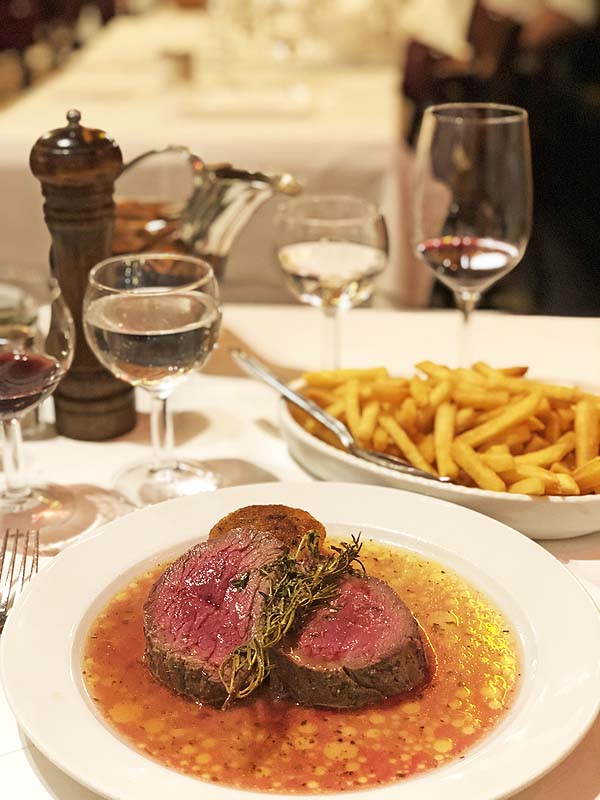
The main course was a Chateaubriand for two, the prime piece of the beef steaks, which is cut from the thicker, two-part end of the fillet, the fillet head. It takes a while to prepare, but it’s worth the wait. It was served in an aluminium bag, in which the aromas of fresh Provencal thyme, rosemary, lemon and pastis were captured, creating a fabulous brew and beautifully flavoured the meat, cooked butter-soft (classic medium rare). To it came ordinary French fries and super fresh, crunchy green beans, as well as two wonderful, strong red wines, a Cru Bourgeois (refers to a category of quality-oriented wineries in Bordeaux, Médoc) from the year 2008, and a much younger, yet very supple, structured red wine, primarily made from Cabernet Sauvignon and Merlot.
A delightful and lavish feast
The desserts continued the classic way – with crème brûlée. This was formidable, firm, yet creamy, with a lovely vanilla note and a crispy crust – not too thick, not too thin, perfectly caramelized. The slightly warm tarte tatin, the traditional apple pie baked upside down, was the crowning glory. She’s perfect! The typical layer of caramel created during baking on the copper or ceramic base of the tart mould, together with the fruity sweet-sour apples and cooling vanilla ice cream (a must!) is the perfect symbiosis.
Tarte tatin and crème brûlée
Two evenings later we again sat down at Paris Bar, for a nightcap, an espresso and that tart. Paris Bar – simply timeless – old but Gold.
Ya desde el simple hecho de caminar junto a las típicas pequeñas mesas redondas de bistró, con bordes dorados, dispuestas bajo el toldo verde oscuro y blanco y el llamativo letrero luminoso rojo, uno se siente como en la Rue Vernier de París, con el aroma de finas fragancias mezclado con una ligera nota de humo de cigarrillo, así como el tintinear de vasos, platos y vajilla.
En la entrada del restaurante, uno es recibido con la inscripción francesa “Passant Sois Moderne” (“Transeúnte, sé moderno”) en un tapete, que en su día estuvo sobre la entrada del punto de encuentro artístico de París, el cabaret “Le Chat Noir”. Y, efectivamente, al entrar se viaja en el tiempo a la historia del restaurante, a sus épocas doradas y a sus clientes más fieles, acercándose, al menos un poco, a la “Belle Époque”.
Numerosas obras maestras de conocidos artistas contemporáneos alemanes, que además son clientes habituales del restaurante, como Daniel Richter, Jürgen Teller o Cosima von Bonin, decoran las paredes, esquinas e incluso los techos de los dos grandes salones. En su momento, también colgaba aquí una obra homónima de Martin Kippenberger, con una escena del restaurante. A cambio del préstamo de este cuadro, el artista había acordado con los propietarios el derecho a ser atendido gratuitamente de por vida. Sin embargo, la obra fue subastada en 2009 en Londres por casi 2.5 millones de libras.
Es inconfundible que el Paris Bar ha sido durante décadas una institución dentro de la escena artística de Berlín. En uno de los comedores, una pared está dedicada exclusivamente a los recuerdos mediante un collage de cientos de fotografías Polaroid que documentan las primeras décadas y, con ello, los años dorados del lugar.
Desde 1979, Michel Würthle, también dibujante, dirige el negocio. Pocos restaurantes en Berlín han generado tantos titulares: desde evasión fiscal y fiestas escandalosas, hasta la presencia de estrellas internacionales y amenazas de insolvencia. Incluso los vasos de plexiglás que se sirven en la mesa —y que al principio sorprenden— revelan que la noche no termina cuando se levantan las aceras, sino que más bien puede derivar en fiestas desenfrenadas con gente bailando sobre las mesas.
Fehmi, nuestro simpático acompañante esa noche, trabaja prácticamente desde que Würthle asumió el control del Paris Bar, y en estos 40 años no solo el lugar ha dejado huella en él, sino también él en el restaurante: su pasión y generosidad, su sutil (y casi francesa) encantadora arrogancia, su desenfado y su sonrisa pícara han aportado al Paris Bar un ambiente en el que los clientes se sienten a gusto y se entregan sin reservas a la noche.
Sabe todo, y mejor que nadie —al menos en lo que respecta a los platos y bebidas ofrecidos—, por lo que fue nuestro cómplice ideal para aquella velada de degustación. Para empezar y estimular las papilas gustativas, nos sirvió un maravilloso champán de bienvenida, delicadamente espumoso, acompañado de una docena de ostras Fines de Claire N°2, junto con pan de granos y mantequilla suave para untar.
Como pequeña sorpresa, Fehmi nos trajo foie gras (hígado de ganso) a la plancha sobre ensalada de campo, achicoria y un aderezo afrutado de yogur con frambuesa. El breve sellado del foie gras intensifica su sabor, ya que el calor suaviza la grasa, permitiendo que se distribuya mejor en la boca, libere más matices salinos y forme además una finísima costra que añade otra dimensión de textura. La achicoria, con su ligero amargor, junto con el aderezo cremoso y afrutado, complementa perfectamente el sabor del hígado.
Luego continuamos con una omelette de trufa, absolutamente deliciosa (que también puede disfrutarse como desayuno tardío o brunch), y una bouillabaisse —uno de mis platos favoritos—. Se sirvió en la clásica sopera blanca con forma de cabeza de león, llena de abundantes filetes de pescado, gambas y vieiras, acompañada, como debe ser, de baguette para untar con rouille, una salsa ligeramente picante a base de ajo, pimiento rojo, patatas, huevo y aceite de oliva. Aunque la rouille no estaba del todo a mi gusto y eché de menos el parmesano rallado que suele servirse en Francia, la sopa en sí era maravillosa: rica en sabores marinos y con una ligera nota de pastis (licor de anís), resultaba simplemente redonda y perfecta. La acompañamos con un excelente vino blanco: un Chardonnay de Chablis 1er Cru “Vaillons” de Domaine Louis Moreau, ligero, fresco y afrutado, ideal para la bouillabaisse.
El plato principal fue un chateaubriand para dos, el corte más selecto del filete de res, obtenido de la parte más gruesa del mismo. Su preparación toma tiempo, pero la espera vale la pena. Se sirvió en una bolsa de aluminio que conservaba los aromas de tomillo provenzal fresco, romero, limón y, nuevamente, pastis, creando un caldo fabuloso y dando como resultado una carne increíblemente aromática y tierna (clásicamente término medio poco hecho). Se acompañó con papas fritas, judías verdes frescas y crujientes, y dos excelentes vinos tintos: un Cru Bourgeois de 2008 y otro más joven, pero igualmente suave y estructurado, elaborado principalmente con Cabernet Sauvignon y Merlot.
El postre también siguió la línea clásica: crème brûlée, firme pero cremosa, con una delicada nota de vainilla y una costra crujiente perfectamente caramelizada. La ligeramente tibia tarte tatin, el tradicional pastel de manzana invertido, fue el broche de oro. Simplemente perfecta: la capa de caramelo formada durante el horneado, junto con las manzanas dulces y ligeramente ácidas y el imprescindible helado de vainilla, es pura poesía.
Dos noches después, volvimos a estar en el Paris Bar para una última copa, un espresso y, por supuesto, esa misma tarte. Paris Bar: simplemente atemporal —old but gold.
%204.17.06%E2%80%AFp.m..png)

Un acto de resistencia intelectual
© 2026 Paolo Luers