

El pasado 31 de marzo, Bruce Springsteen inició su tour “Land of Hope and Dreams / País de Esperanza y Sueños” en Minneapolis. Un concierto dedicado a la lucha contra a las políticas de Donald Trump.
Publicamos aquí la crónica del New York Times sobre el concierto y el video del concierto.
Al final del artículo del NYT se encuentra la traducción al español (chatgtp).
Bruce Springsteen Brings Fiery Speeches and Songs to Minneapolis
The E Street Band opened its Land of Hope and Dreams tour on Tuesday night, where the musician asked the crowd to choose “unity over division and peace over war.”
By Evelyn McDonnell / Reporting from Minneapolis / April 1, 2026 / NEW YORK TIMES
Bruce Springsteen has a rare talent for capturing cultural flash points and crystallizing them in song. The proud son of New Jersey did it in 2001 with “American Skin (41 Shots),” about the killing of Amadou Diallo, an unarmed Black man, by police. He did it in 2002 with “The Rising,” an album about recovery and resilience after the attack on the World Trade Center, and again in 2006, when his performance of songs including “We Shall Overcome” and “My City of Ruins” in New Orleans after Hurricane Katrina brought the audience at the Jazz & Heritage Festival to tears.
And in 2026, he has tapped the zeitgeist with “Streets of Minneapolis,” a Dylanesque ode written and released just days after ICE officers fatally shot Renee Nicole Good and Alex Pretti in the Twin Cities.
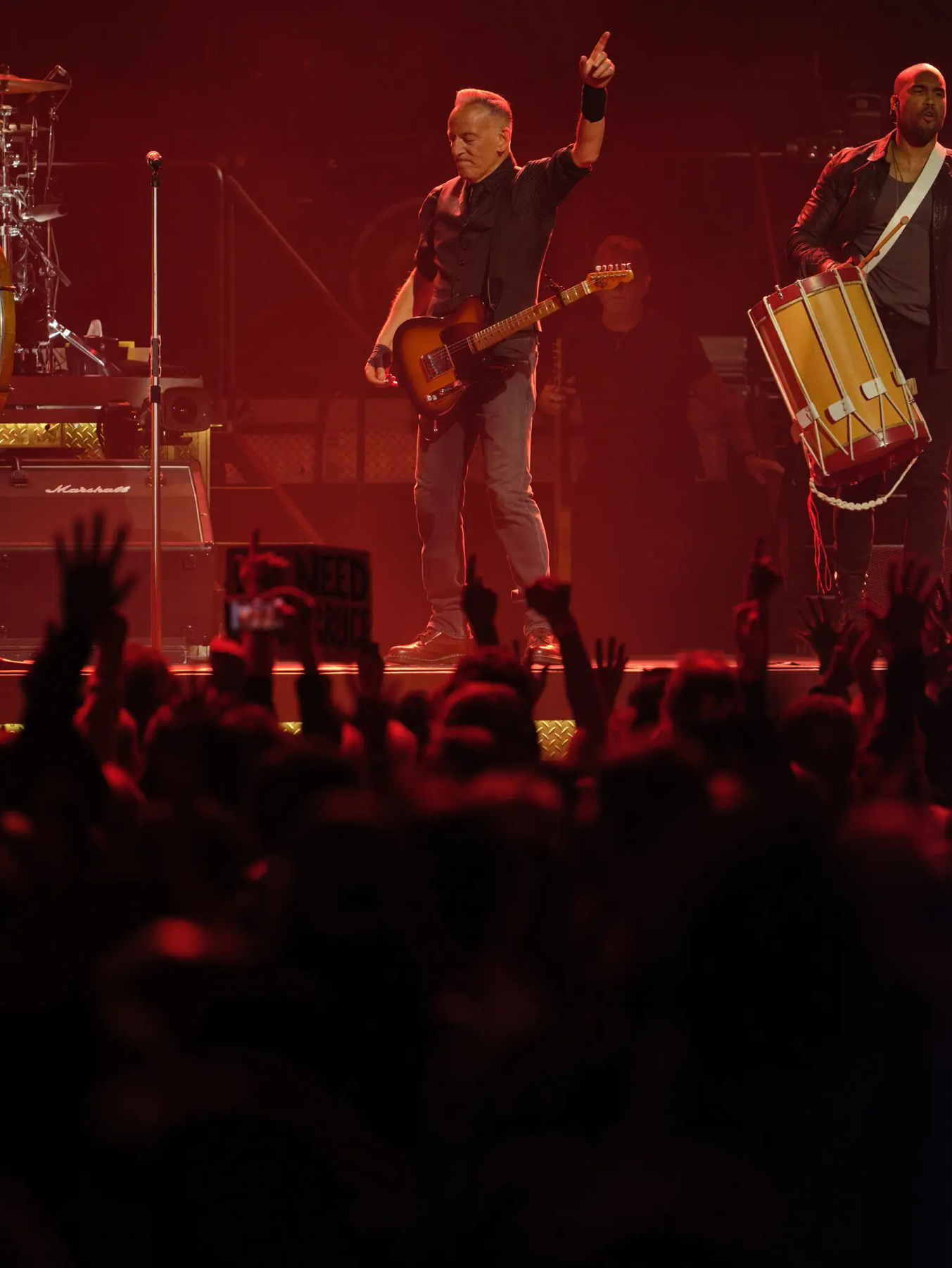
Springsteen and the E Street Band played the new tune Tuesday at the first night of their Land of Hope and Dreams tour in Minneapolis, as part of a blistering six-song opening salvo that included “Darkness on the Edge of Town,” the title track of his 1978 album about oppression and depression.
“This past winter, federal troops brought death and terror to the streets of Minneapolis,” Springsteen, 76, said to the packed Target Center. “Well they picked the wrong town. The power, the solidarity of the people of Minneapolis, of Minnesota, was an inspiration to the entire country. Your strength and your commitment told us this is still America. And this will not stand.”
The crowd of nearly 18,000 held lighted cellphones aloft, creating a sea of stars as they shouted along to the lyrics “ICE out now!” once, twice, three times, and then four, louder each time. They booed the names Noem and Miller and cheered for Good and Pretti. Nearby, a man stood weeping.
Springsteen had come out swinging, telling the crowd, “Tonight we ask all of you to join with us in choosing hope over fear, democracy over authoritarianism, the rule of law over lawlessness, ethics over unbridled corruption, resistance over complacency, unity over division and peace over war.”
The last, shouted word was the first of the opening song, the 1970 protest anthem “War” by Edwin Starr. The cover was immediately followed by another antiwar song, Springsteen’s own “Born in the USA.” The 1984 hit offered a doubly timely message: It is currently being used by the American Civil Liberties Union in its campaign to support the birthright citizenship case, which is being argued in the Supreme Court beginning on Wednesday.
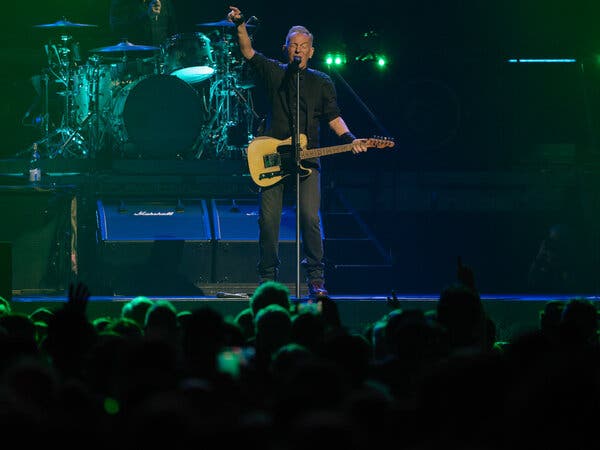
Since Springsteen opened his European tour last May by calling on “the righteous power of art, of music, of rock ’n’ roll, in dangerous times,” the 20-time Grammy winner has had a momentous year. A boxed set of previously unreleased albums, a biopic, a protest anthem, an entire academic conference about his work, and now this tour. He said at the Target Center that the concerts had not been planned, but were inspired by the Minnesota resistance. The final date is May 27 in Washington.
The 17-member group was joined on several songs by the Rage Against the Machine guitarist Tom Morello, who has toured with Springsteen before. (Patti Scialfa did not perform; the musician, who is married to Springsteen, announced she has cancer in 2024.) Morello, a Gen X-er, provides the most dynamic counterpart to Springsteen’s old-school heroics since the E Streeters lost the sax player Clarence Clemons to complications of a stroke in 2011. On “The Ghost of Tom Joad,” a 1995 protest ballad based on John Steinbeck’s novel about Dust Bowl migrants, “The Grapes of Wrath,” Morello played a punk-metal-hip-hop soliloquy on a guitar painted with the message “Arm the Homeless.” As he swirled around the stage, ripping note after incendiary note, the crowd rose to its feet.
The E Streeters next slammed into the opening riff of “Badlands,” another song from “Darkness,” but this one about escape and redemption. Like so many of the tunes Springsteen performed, the lyrics took on new meaning in 2026: “Poor man wanna be rich, rich man wanna be king / And a king ain’t satisfied, ’til he rules everything,” Springsteen sang just three days after having performed at the No Kings rally at the Minnesota State Capitol.
For almost three hours Bruce never left the stage. After turning off the lights briefly, he came back to the front to the sound of notes that probably everyone there recognized. “For the maestro,” he said, and the band played “Purple Rain.” No kings, but yes, Prince.
He gave a final speech, speaking about the freedom to disagree. “Now I go back to thinking about Renee Good’s last words before she died, he said. “To the man who she was protesting against, the man who would take her life, she said, ‘That’s fine dude, I’m not mad at you.’ I’m not mad. God bless her.”
Then Springsteen closed with a song by another Minnesota legend, Bob Dylan’s “Chimes of Freedom.”
Bruce Springsteen lleva discursos encendidos y canciones a Minneapolis
De Evelyn McDonnell / Reportando desde Minneapolis / 1 abril 2026
Bruce Springsteen tiene un talento poco común para capturar momentos clave de la cultura y cristalizarlos en canciones. El orgulloso hijo de Nueva Jersey lo hizo en 2001 con “American Skin (41 Shots)”, sobre la muerte de Amadou Diallo, un hombre negro desarmado, a manos de la policía. Lo volvió a hacer en 2002 con “The Rising”, un álbum sobre la recuperación y la resiliencia tras el ataque al World Trade Center, y nuevamente en 2006, cuando su interpretación de canciones como “We Shall Overcome” y “My City of Ruins” en Nueva Orleans, después del huracán Katrina, hizo llorar al público del Jazz & Heritage Festival.
Y en 2026, ha captado el espíritu de la época con “Streets of Minneapolis”, una oda al estilo de Dylan escrita y publicada apenas unos días después de que agentes del ICE mataran a tiros a Renee Nicole Good y Alex Pretti en las Ciudades Gemelas.
Springsteen y la E Street Band interpretaron la nueva canción el martes por la noche en el inicio de su gira “Land of Hope and Dreams” en Minneapolis, como parte de una contundente apertura de seis canciones que incluyó “Darkness on the Edge of Town”, la pista principal de su álbum de 1978 sobre la opresión y la depresión.
“Este pasado invierno, tropas federales trajeron muerte y terror a las calles de Minneapolis”, dijo Springsteen, de 76 años, ante un repleto Target Center. “Pero eligieron la ciudad equivocada. El poder y la solidaridad del pueblo de Minneapolis, de Minnesota, fueron una inspiración para todo el país. Su fortaleza y su compromiso nos dijeron que esto sigue siendo Estados Unidos. Y esto no se permitirá.”
La multitud, de casi 18,000 personas, levantó sus teléfonos móviles encendidos, creando un mar de estrellas mientras coreaban la letra “¡ICE fuera ya!” una, dos, tres y luego cuatro veces, cada vez más fuerte. Abuchearon los nombres de Noem y Miller y vitorearon a Good y Pretti. Cerca de allí, un hombre permanecía de pie llorando.
Springsteen salió con fuerza, diciéndole al público: “Esta noche les pedimos a todos que se unan a nosotros para elegir la esperanza sobre el miedo, la democracia sobre el autoritarismo, el estado de derecho sobre la ilegalidad, la ética sobre la corrupción desenfrenada, la resistencia sobre la complacencia, la unidad sobre la división y la paz sobre la guerra.”
Esa última palabra, gritada, fue la primera de la canción de apertura, el himno de protesta de 1970 “War” de Edwin Starr. Esa versión fue seguida de inmediato por otra canción antibélica, “Born in the USA”, del propio Springsteen. El éxito de 1984 ofrecía un mensaje doblemente oportuno: actualmente está siendo utilizado por la Unión Americana de Libertades Civiles en su campaña para apoyar el caso sobre la ciudadanía por nacimiento, que comienza a debatirse en la Corte Suprema el miércoles.

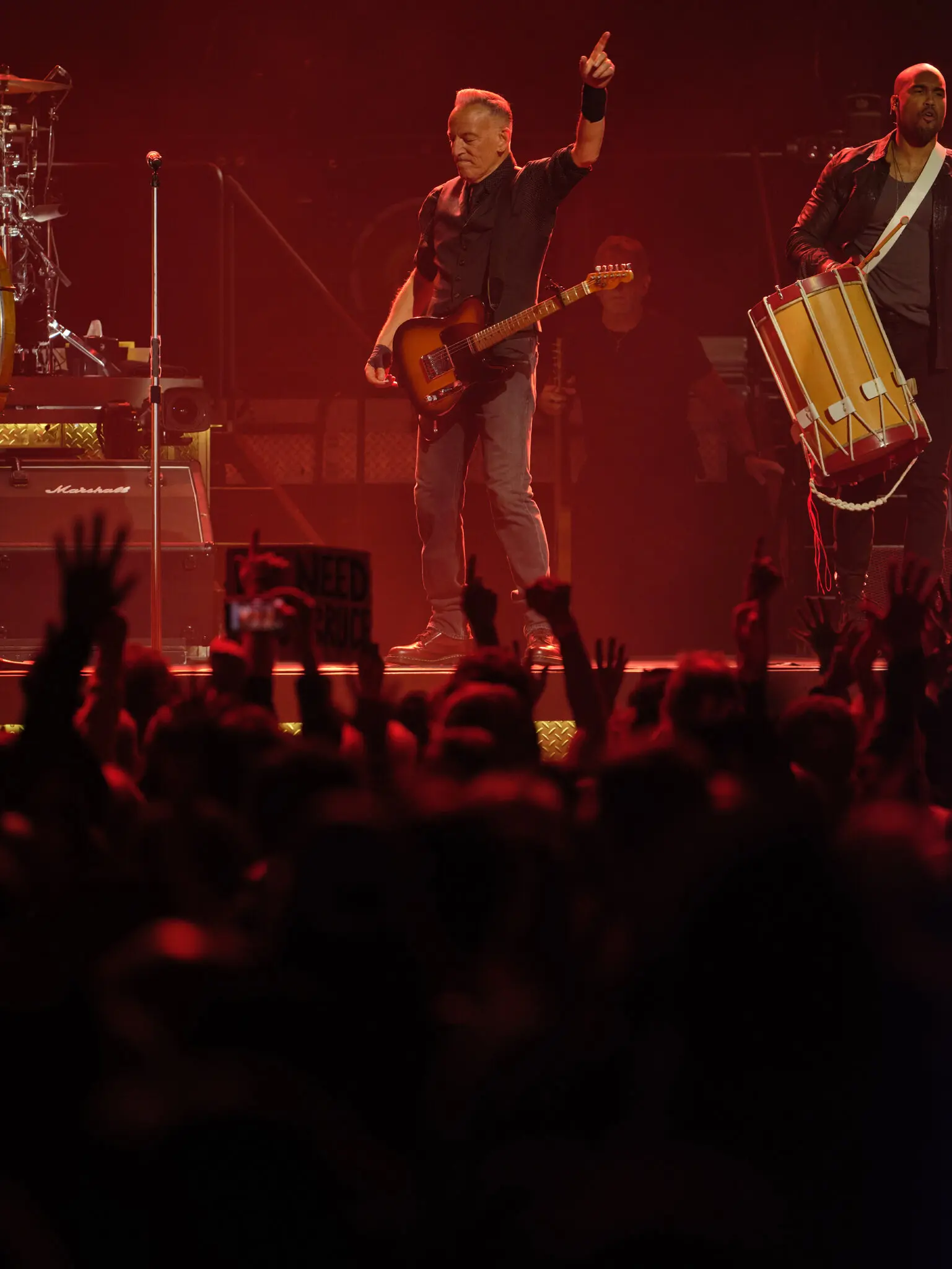
Desde que Bruce Springsteen inauguró su gira europea el pasado mayo llamando al “poder justo del arte, de la música, del rock ’n’ roll, en tiempos peligrosos”, el ganador de 20 premios Grammy ha tenido un año trascendental. Un box set de álbumes inéditos, una película biográfica, un himno de protesta, toda una conferencia académica sobre su obra y ahora esta gira. Dijo en el Target Center que los conciertos no habían sido planeados, sino que fueron inspirados por la resistencia de Minnesota. La fecha final es el 27 de mayo en Washington.
El grupo de 17 integrantes contó en varias canciones con la participación del guitarrista de Rage Against the Machine, Tom Morello, quien ya ha girado antes con Springsteen. (Patti Scialfa no actuó; la músico, esposa de Springsteen, anunció en 2024 que tiene cáncer). Morello, perteneciente a la Generación X, ofrece el contrapunto más dinámico a la heroicidad clásica de Springsteen desde que la E Street Band perdió al saxofonista Clarence Clemons por complicaciones de un derrame cerebral en 2011. En “The Ghost of Tom Joad”, una balada de protesta de 1995 basada en la novela de John Steinbeck sobre los migrantes del Dust Bowl, “The Grapes of Wrath”, Morello interpretó un soliloquio punk-metal-hip-hop con una guitarra pintada con el mensaje “Arm the Homeless”. Mientras giraba por el escenario, arrancando nota tras nota incendiaria, el público se puso de pie.
Luego, la E Street Band irrumpió con el riff inicial de “Badlands”, otra canción de “Darkness”, pero esta sobre la huida y la redención. Como muchas de las canciones que interpretó Springsteen, la letra adquirió un nuevo significado en 2026: “Poor man wanna be rich, rich man wanna be king / And a king ain’t satisfied, ’til he rules everything”, cantó Springsteen apenas tres días después de haberse presentado en la manifestación No Kings en el Capitolio estatal de Minnesota.
Durante casi tres horas, Bruce no abandonó el escenario. Tras apagar las luces brevemente, volvió al frente al sonido de unas notas que probablemente todos reconocieron. “Para el maestro”, dijo, y la banda interpretó “Purple Rain”. Sin reyes, pero sí Prince.
Ofreció un discurso final, hablando sobre la libertad de disentir. “Ahora vuelvo a pensar en las últimas palabras de Renee Good antes de morir”, dijo. “Al hombre contra el que protestaba, el hombre que le quitaría la vida, ella le dijo: ‘Está bien, amigo, no estoy enojada contigo’. No estoy enojada. Dios la bendiga.”
Luego, Springsteen cerró con una canción de otra leyenda de Minnesota, Bob Dylan: “Chimes of Freedom”.
